
MFI, Density and Moisture: How to Read a Granule Test Report
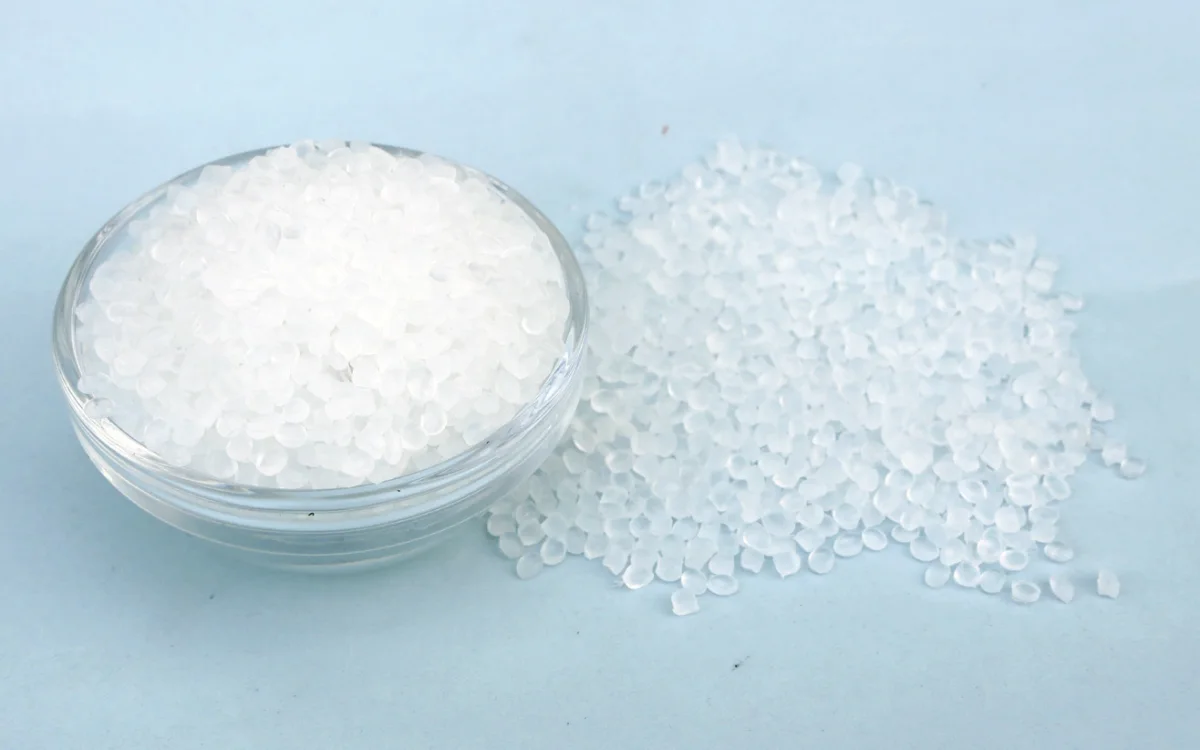
A batch test report is short, and three lines on it do most of the work: melt flow index, density and moisture. Here is what each one tells you, and what to do when a number moves.
Melt flow index (MFI)
MFI is the weight of molten polymer, in grams, that flows through a standard die in ten minutes at a set temperature and load. For polypropylene the usual condition is 230 °C with a 2.16 kg load.
A higher MFI means the melt flows more easily, which suits thin walls and long flow paths in injection moulding. A lower MFI means a stiffer melt with more strength, which suits extrusion and blow moulding.
The number that matters most is not the MFI itself but how much it changes from one batch to the next. If it holds steady, your machine settings hold steady too.
Density
Polypropylene is a light polymer, with a density of roughly 0.90 to 0.91 g/cm³. A reading well above that band suggests other polymers or mineral filler in the material. For recycled granules, density is a quick, reliable screen for mixed material.
Moisture content
Polypropylene does not absorb much water, but moisture can sit on the surface of granules after washing or storage. In the mould that moisture turns to steam and leaves splay marks, silver streaks or voids. Keep bags closed, store them off the floor, and dry the material before use if it has been exposed.
The check that has no number
A visual inspection catches what instruments do not: specks, off-shade granules, foreign particles and uneven granule size. On a visible part these defects are the ones your customer sees first.
What we test
At Markandey Polymers every batch is tested in our in-house lab before dispatch for MFI, density, moisture content, visual quality and contamination, elongation and Izod impact strength.