PP vs PPCP Granules: Which One Does Your Moulding Job Need?
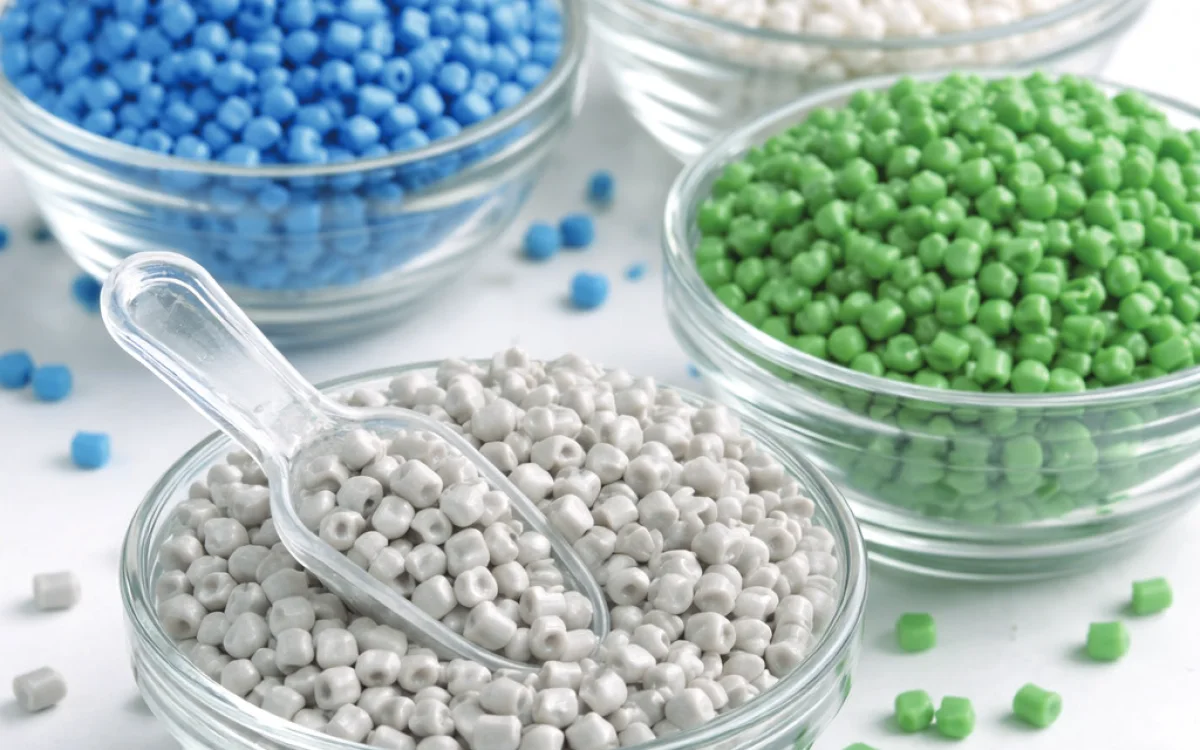
Polypropylene is sold in two broad families. Homopolymer, usually written simply as PP, is made from propylene alone. Copolymer, written PPCP or just CP, has a small amount of ethylene built into it. The two look the same in the bag. They do not behave the same in the mould or in the finished part.
What PP does well
PP homopolymer is the stiffer of the two. It holds its shape under load, resists heat a little better and gives a harder, glossier surface. That makes it a natural fit for caps and closures, thin-walled containers, housewares and parts where rigidity matters more than toughness.
Its weak point is impact at low temperature. A homopolymer part that survives a drop in summer may crack when the same drop happens on a cold morning.
What PPCP does well
The ethylene in a copolymer makes the material tougher. PPCP absorbs impact instead of cracking, and it keeps that toughness when the temperature falls. It gives away a little stiffness and surface hardness in exchange.
That trade is why copolymer is the usual choice for crates, buckets, furniture, luggage shells, automotive parts and anything that will be dropped, stacked, sat on or carried.
A simple way to decide
- If the part must be rigid, glossy or hold a thread, start with PP.
- If the part must survive knocks, drops or cold storage, start with PPCP.
- If the part must do both, run a trial with each and compare.
How this maps to our range
In the Markandey catalogue, grades with CP in the name belong to the copolymer family, while the NPP and MPP grades are polypropylene. Tell us what the part has to survive and we will suggest the grade to trial first.