Injection Moulding Defects: Which Come from the Granule and Which from the Machine
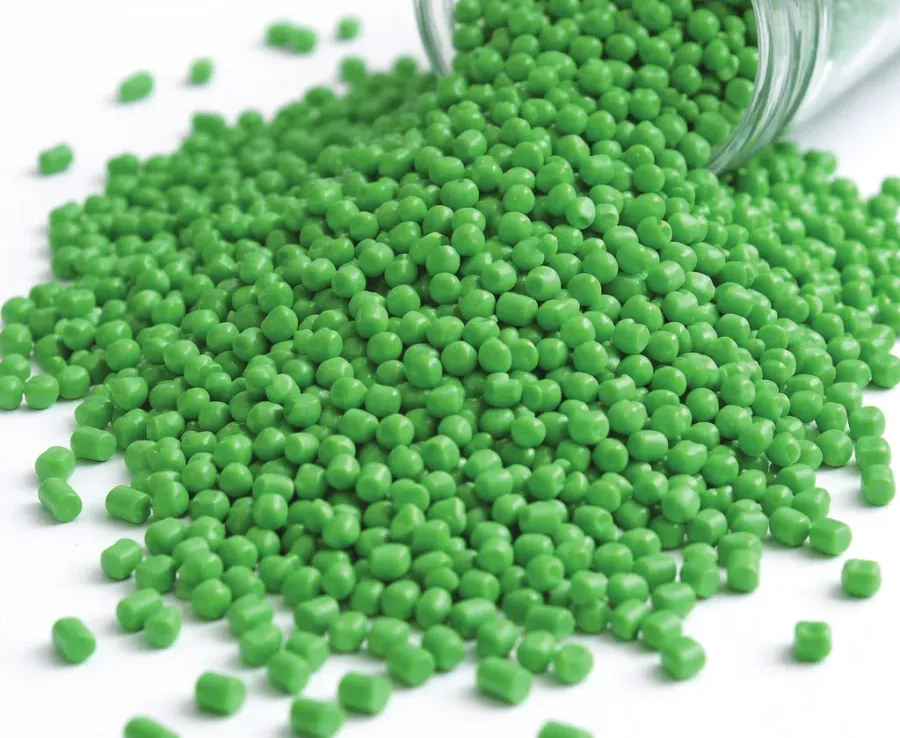
Most injection moulding defects that start in the granule show up on one of six batch checks: moisture, melt flow index (MFI), density, a visual and contamination check, elongation and Izod impact strength. If the report for your lot matches your approved lot and the defect is still there, look at the machine, the mould and your shop-floor habits before you change the supplier.
Which defects come from the granule, and which check catches them?
| Defect on the part | Cause in the granule | Check on the batch report |
|---|---|---|
| Splay marks, silver streaks, voids | Surface moisture left after washing or storage, which turns to steam in the mould | Moisture content |
| Short shots, incomplete filling, higher injection pressure | MFI too low for the mould | MFI |
| Flash, often with lower impact strength | MFI too high for the part | MFI |
| Settings, cycle time or part weight drifting | MFI or density changing from lot to lot | MFI and density |
| Weak, flaky parts | Other polymers such as HDPE, or mineral filler, mixed in | Density |
| Specks, foreign particles, off-shade granules | Contamination or uneven granules | Visual and contamination |
| Cracks at snap fits, hinges and thin walls | Material that does not stretch far enough before it breaks | Elongation |
| Parts that break when dropped or knocked | Impact strength too low for the job | Izod impact strength |
The last row is sometimes a grade choice rather than a bad lot. PP homopolymer can turn brittle in the cold, and a copolymer (PPCP) is chosen where a part must survive drops and knocks.
Which defects start at the machine instead?
Shade problems are the clearest case, as our guide to shade consistency in coloured PP explains. Several begin at the machine rather than in the bag:
| What you see | Machine or shop-floor cause | What to do |
|---|---|---|
| Light shades darkening or turning yellow | Higher barrel temperatures and long residence times | Fix the temperature profile and cycle time for the job, and record them |
| A tint from the previous job | Traces of the last colour in the barrel, hopper or dryer | Purge properly between colours, light to dark where possible |
| Shade changing through a run | A changing share of regrind, or two lots mixed mid-run | Keep the regrind percentage constant and run each job from one lot |
| Splay or streaks on a lot that tested dry | Bags left open or stored on the floor | Keep bags closed and off the floor; dry material that has been exposed |
How do you tell whether the granule or the machine is at fault?
- Read the batch report against your approved lot. The MFI figure matters less than how much it has moved. Check density and moisture on the same sheet.
- Run the old and new material under the same settings. Keep some of your approved material for this, change one thing at a time, and let the process settle before you judge any parts.
- If the defect appears with both, the granule is not the cause. A sink mark or a weld line that shows whatever is in the hopper is a process or mould question.
- If it appears only with the new lot, keep marked parts from both lots, note cycle time, part weight and rejects, and send them to the supplier.
The same method works for approving a new supplier; see how to trial a new plastic dana supplier, and our guide to reading a granule test report.
What do we check before a batch leaves our plant?
Every batch from our plant in Narela, Delhi is tested in our in-house lab for all six properties in the first table, and nothing is dispatched until it has passed all six. Our quality page explains what each check guards against, from splay to cracking, for the injection moulding defects that can start in the granule.
Where should you start if you are chasing a defect now?
Send us the part and the grade you are running; a shade problem is usually quicker to solve together. For a new job, see our CP Colour granules or natural PP granules. Share the grade, your process and your monthly quantity for a quotation and a trial sample.