Short Shots on PP Parts: Is the MFI Too Low?
A short shot is a moulding that comes out incomplete because the melt froze before it filled the cavity. If the short shots started with a new lot of PP and nothing else changed, compare that lot's MFI with your last good lot before touching the machine: a lower MFI means a stiffer melt that may not reach thin ribs or the far end of a long flow path.
What does an injection moulding short shot look like?
The part is missing material where the plastic arrives last: thin ribs, sharp corners, the edge furthest from the gate. An injection moulding short shot can come from the granule or from the machine, so the first job is to find out which.
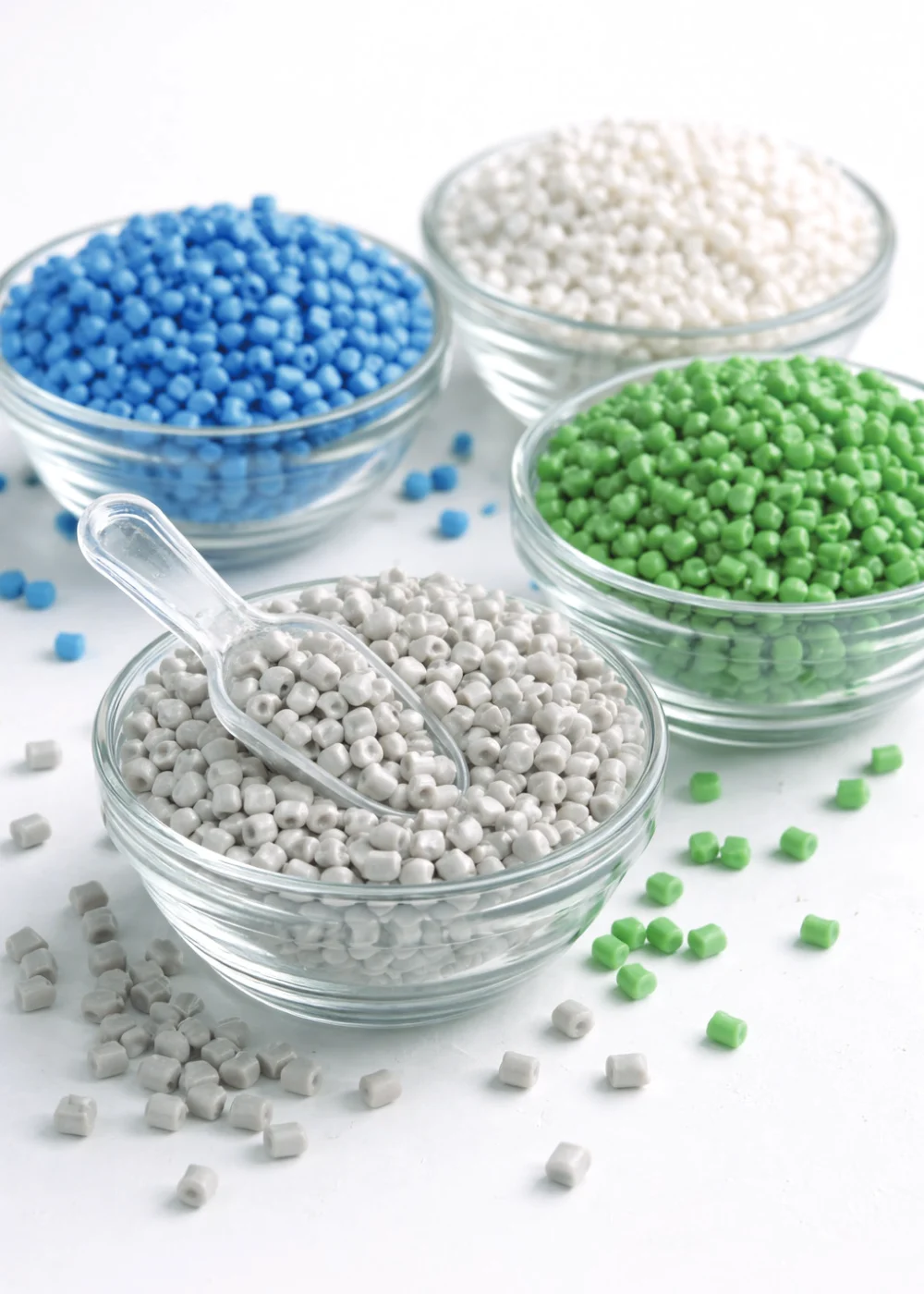
If you are sourcing material for the job, our PP and PPCP plastic granules are made at our own plant in Narela, Delhi, and every batch is lab tested before dispatch.
Is the material or the machine causing it?
| What you see | Points to |
|---|---|
| Short shots began on the day a new lot went into the hopper | The material |
| A saved bag of the old lot fills fully on the same settings | The material |
| Settings or part weight drift from one lot to the next | MFI or density changing between lots |
| The same spot stays short with the old lot as well | The machine or the mould |
| Only one cavity of a multi-cavity mould is short | The mould: that gate or runner |
| Burn marks where the part stops filling | Trapped air and venting; see gas marks |
How can a low MFI cause short shots?
MFI is the weight of melted polypropylene, in grams, that flows through a standard die in ten minutes, normally at 230 °C under a 2.16 kg load. A lower figure means a thicker melt. It needs more pressure to move, and in a thin wall it can freeze before the cavity is full.
Our MFI of PP guide gives rough bands as a starting point rather than a rule: general injection moulding often runs around 8 to 25 g/10 min, and thin-wall or fast-cycle work often 30 g/10 min and above. For most moulders, though, a steady MFI from lot to lot matters more than the exact number. Reprocessing can raise the MFI of polypropylene and recycled material varies more than virgin, which is why it should be tested batch by batch.
How do you check the new lot against the last good one?
- Put the two batch reports side by side. Look at how far the MFI has moved, then at density and moisture. Our guide to reading a granule test report explains each line.
- Run a few shots from the old lot and the new lot on the same settings, changing nothing else.
- Weigh parts from both. A lighter part from the new lot on the same settings confirms the flow has changed.
- If only the new lot runs short, keep marked parts from both lots, note the lot numbers and rejects, and send them to the supplier.
What can you adjust while the lot question is settled?
- Check that the shot size and cushion still suit the part, and that the nozzle and gate are clear.
- Within the grade's processing window, a little more melt temperature, injection speed or pressure can get a stiffer lot to fill.
- Keep the regrind share constant. A changing mix of regrind and fresh granules changes how the melt flows.
- Write down every change, so the old settings can be restored when the next lot arrives.
Which grade should you ask for if the part keeps running short?
If the walls are thin or the flow path is long, ask for a grade at a higher MFI and hold every lot to it. If the part also has to survive drops, a PPCP granule gives better impact strength at the same MFI. Every batch we make is checked for MFI, density, moisture, contamination, elongation and Izod impact strength, and nothing is dispatched until it has passed all six; see our quality assurance page.
For a price and a trial sample, send us the part or a photograph with its wall thickness, the MFI of your last good lot, the shade, your monthly quantity and your city.